You know what you're capable of. So why can't you show it?
You prepare more than anyone. You have the ideas. But in the meeting, in the pitch, in the moment that matters, something locks up. The words don't come out the way they sound in your head. And afterward, you replay it for hours.
Sound familiar?
Your brain is doing exactly what it's designed to do
When the stakes feel high, your nervous system shifts into self-protection mode. Creativity shuts down. Spontaneity disappears. You default to the safest, most rehearsed version of yourself, which is also the least compelling one.
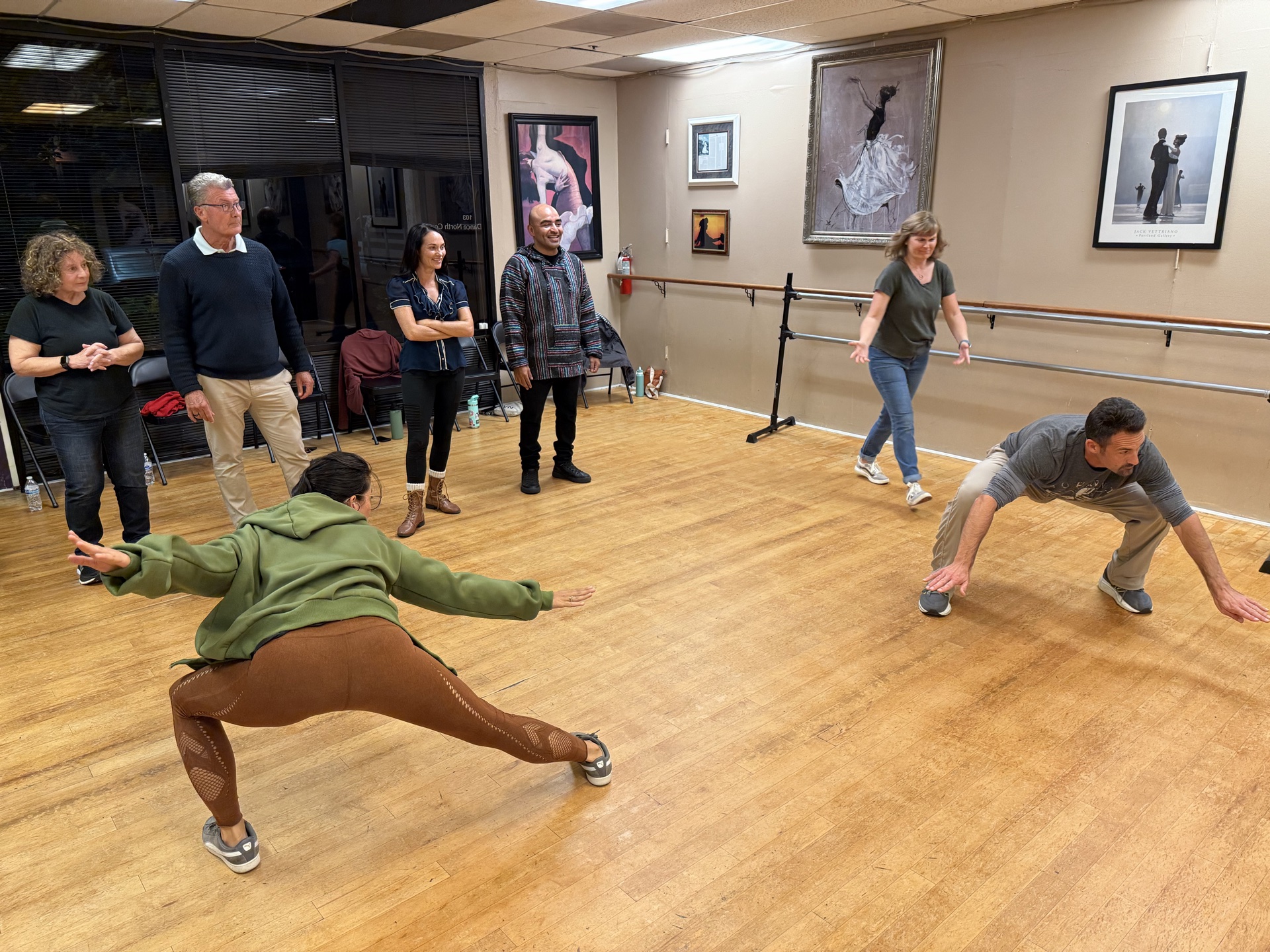
Reading books about presence doesn't fix this. Neither does more preparation. The only way to rewire the pattern is to practice being spontaneous, making mistakes, and recovering, in a space where the stakes are low and the support is real.
Most of our participants are professionals in their 30s and 40s — engineers, managers, founders — who are great at their jobs but know they’re leaving impact on the table every time they hold back in a room.
“I went from dreading team meetings to actually looking forward to them. Not because the meetings changed — I changed. My manager noticed within weeks and said it was like working with a different person.”
— Marketing manager, 3 cohorts completed
What you'll actually practice
Tangible skills, not theory
Think on your feet
Respond in the moment instead of freezing. Build the reflex, not just the intention.
Recover from mistakes
Practice messing up, and discover it's not the end of the world. That's where real presence lives.
Listen and build
The people who command a room aren't the loudest, they're the most present. Practice active listening that makes others feel heard.
Own the room
Presence isn't a personality trait, it's a skill. Practice storytelling, eye contact, and showing up as yourself.
Why this, not that? Unlike Toastmasters or presentation coaching, improv doesn’t train you to deliver a script — it trains your reaction speed. The skill you actually need when there’s no teleprompter and no slides to hide behind.
Not a comedy class. Not therapy. Something better.
The Neural Improv methodology was developed over 25 years and tested with 15,000+ participants, from Fortune 500 executives to people who'd never stepped on a stage. It uses games, play, and guided exercises to train your brain to respond instead of react.
Try it before you commit
Come to a free meetup. 2 hours. No pressure. See if it's for you.
Held monthly. Next meetup dates posted on our events page.
Want to bring this to your whole team? See our corporate programs →
Different challenge? Same solution. Explore other paths.